How to Properly Store Epoxy Adhesives
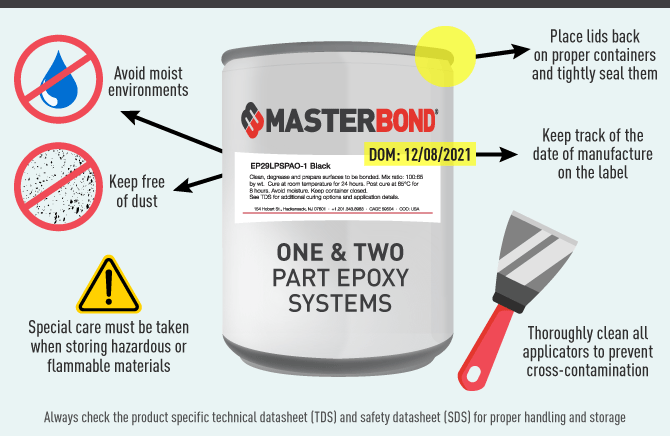
Master Bond epoxy adhesives are freshly prepared to maximize shelf life. The date of manufacture is clearly shown on each label, and technical datasheets include storage directions and shelf life for every product. If not stored properly, the product will not perform as intended.
General Storage Principles
Regardless of system type, the following baseline conditions apply to all epoxy adhesives. Store products at approximately 75°F (24°C) and maintain ambient humidity below 50%, as moisture absorption can compromise cure. Always close lids fully and tightly after every use — even brief exposure allows moisture ingress and contamination. UV-curable products should additionally be kept in a cool, dark location away from any light source that could initiate premature cure. Consult each product's technical datasheet (TDS) and safety datasheet (SDS) for product-specific storage requirements.
Two Component Epoxies
Typical storage conditions for two-component epoxy adhesives are ambient temperatures of 20–25°C (68–77°F), in a dry location in original, unopened containers. Once containers are opened, material should be kept free from moisture, dust, and temperature extremes. Containers should be stored in well-ventilated areas, tightly sealed with original lids. Applicators such as spatulas should be thoroughly cleaned after each use to prevent cross-contamination.
Premixed and Frozen Epoxies
Premixed and frozen two part epoxies are packaged in syringes ranging from 1 cc to 10 cc and shipped in specially insulated cartons packed with dry ice. When stored at -40°C (-40°F) the shelf life is 6 months. These systems cure at room temperature and cannot be re-frozen or re-used once they are thawed out.
One Component Epoxies
Specific one-component epoxy systems require storage at 5–10°C (40–50°F). These products should only be dispensed after being brought to ambient temperature. Many one-component systems are available for use in syringe and cartridge applicators.
Safety Instructions
Special care must be taken when storing hazardous and flammable materials. Always refer to the product-specific technical datasheet (TDS) and safety datasheet (SDS) for proper handling and storage guidance. All applicable local, state, federal, and international regulations must be followed.
For guidance on mixing, curing, and application best practices, see Best Practices for Optimizing Adhesive Performance.