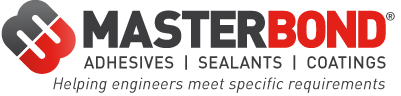
Master Bond EP30-2 epoxy was qualified for use in critical Laser Interferometer Gravitational-Wave Observatory ( LIGO) bonding applications. The main applications involved bonding prism elements, and bonding acoustical dampeners to optical components.
Two component, room temperature curing epoxy system for bonding, sealing, coating and encapsulation featuring a wide range of desirable properties
Key Features
- Extremely optically clear
- Superb physical strength properties
- Meets NASA low outgassing specifications
- Cryogenic serviceability
- Outstanding electrical properties
- Withstands 1,000 hours 85°C/85% RH
Product Description
Master Bond EP30-2 is a lower viscosity, two component epoxy system combining a number of highly desirable attributes. It is easily processed and has a non-critical ten to one mix ratio by weight. EP30-2 cures readily in 24-48 hours at room temperature or more rapidly at elevated temperatures, e.g. 2-3 hours at 150-200°F. The optimum cure is overnight at room temperature followed by 2-3 hours at 150-200°F. This epoxy flows smoothly and evenly after mixing, and is easily applied as an adhesive, coating or potting material.
EP30-2 has great optical clarity. Its physical strength profile, especially tensile, tensile lap shear and compressive strength, among others is most impressive. It is a terrific electrical insulator and is well suited for smaller potting and encapsulation applications. It is a highly structural system, that is to say it is rigid without being brittle. It is very dimensionally stable with low shrinkage upon curing. EP30-2 is a superior adhesive that bonds well to a wide variety of substrates including metals, composites, glass, ceramics and many rubbers and plastics. EP30-2 is highly resistant to water, oils, fuels, acids, bases and many solvents. EP30-2 also has been used successfully in a number of cryogenic applications. Its service temperature range is from 4K to +300°F. It passes NASA low outgassing specifications. This exceptionally versatile system can be used in a variety of applications in aerospace, electronic, optical and specialty OEM industries, especially when optical clarity and low outgassing are important criteria.
Product Advantages
- Convenient handling and processing
- Favorable physical strength profile
- Compelling optical clarity and light transmission
- Very low shrinkage upon curing
- A “go-to” material for small potting and encapsulation applications
Industrial Certifications

ASTM E595 Compliant
1,000 Hours at 85°C/85% RH

Meets EU Directive 2015/863
Packaging

Cans

Double Barrel Cartridge

Gun Applicator

Pails

Premixed & Frozen Syringe
EP30-2 is available is various sizes and units to accommodate customer's needs.
Case Studies
Visual Media
Featuring a wide range of desirable properties, EP30-2 is a room temperature curing epoxy that meets NASA low outgassing specifications. This two part system was approved for demanding bonding applications by the Laser Interferometer Gravitational-Wave Observatory (LIGO).
